
INDEPENDENT FIELD STUDIES
LIVE WEIGHT STUDY IN CALVES
Controlled Study – Independently Conducted by University of Queensland
Introduction
The long-term productivity benefits of improving health and growth of calves in their early stages of development is well documented and understood.
The Good Clinical Practice Research Centreat the University of Queensland’s School of Veterinary Science conducted a double blinded, controlled, randomized study to evaluate the efficacy of Mylo® on the live weight of pre-weaned dairy calves.
Results
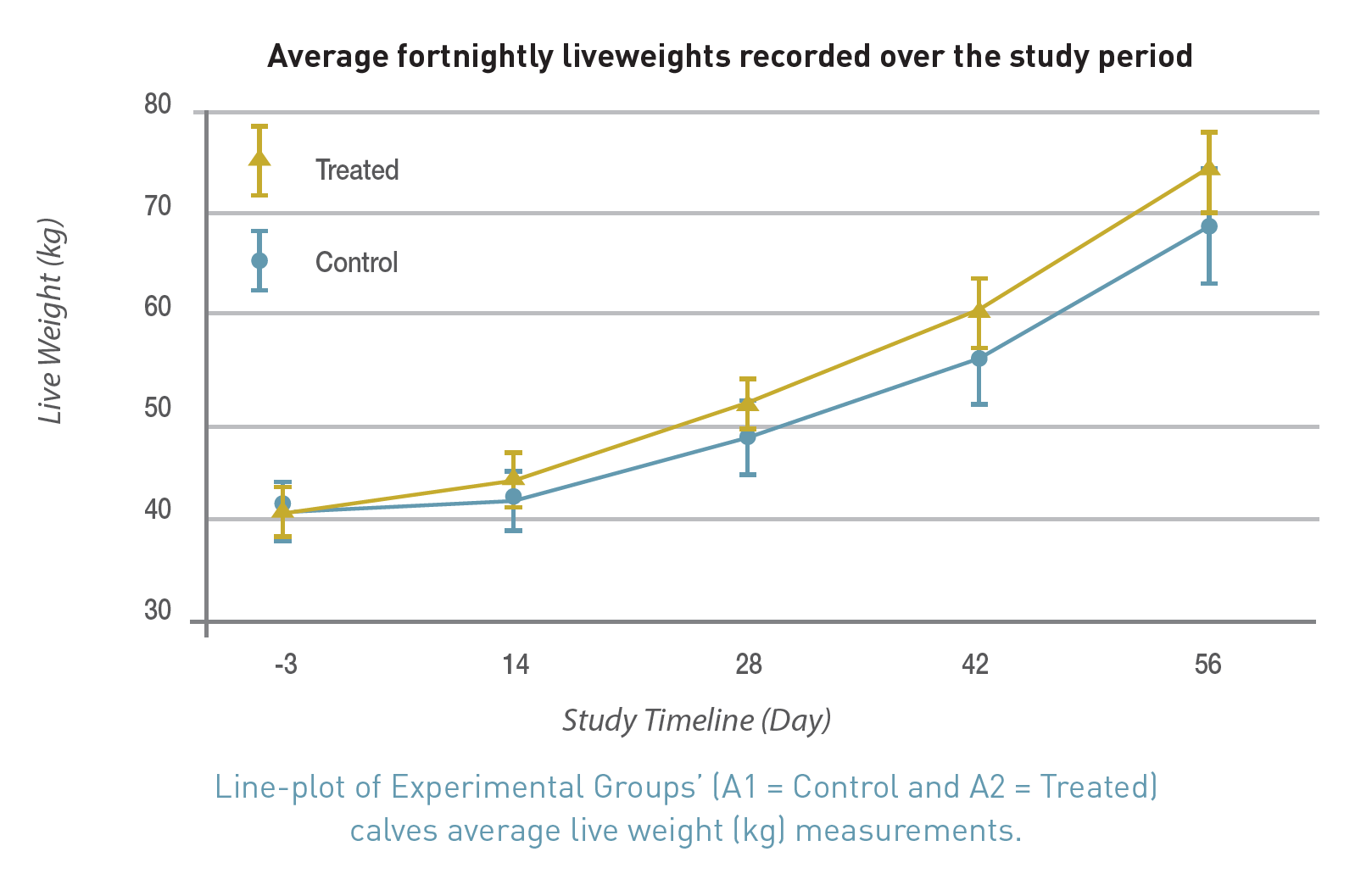
Calves in the Treated Group were 8.4% heavier, and uniformity of liveweights was better, at weaning age compared with calves in the Control Group (p=0.02).
Details are tabled below and a line-plot shows average fortnightly liveweights recorded over the study period.
Average and total feed intake did not differ between the groups.
| Average (kg) | |
|---|---|
| Control | 69.18 kg |
| Treated | 75.01 kg |
| Difference Treated – Control |
5.83kg, 8.4%, (p=0.02) |
Study Design and Methods
Forty-four clinically healthy calves of approximately 3 days of age were randomly split into two equal sized groups – Treated Group (22 calves) and Control Group (22 calves). Calves were housed in individual pens as part of a controlled study design to reduce the risk of cross contamination with commonly occurring health ailments.
All animals were tube-fed colostrum before reaching approximately one day of age. The feeding regime for all animals consisted of milk replacer at 15% of their
body weight, fed in a bucket twice a day, plus ad lib access to hay, grain pellets, and clean water through the entire period of the Study. With exception to Monensin, there were no feed additives or antibiotics added to the feed. Mylo was added to the milk replacer of the Treated Group.
Assessments were conducted fortnightly through the study which concluded when calves reached 56 days of age, consistent with the weaning age at this university dairy operation. At the end of the study, tissue and organ samples were taken from three calves in each Group after weaning, for measuring weights of their key gastrointestinal organs.
The initial histological examination of the organ tissue of the gastrointestinal tract indicates the treated animals exhibit accelerated development of gut structures. There was an observed increase in the surface area of the lining of the gut.
| Autopsy Results | Treated Group Average Weight (g) | Control Group Average Weight (g) | Difference |
|---|---|---|---|
| Duodenum with digesta | 87g | 33g | 54g, 163% (p <0.05) |
| Abomasum without digesta | 450g | 390g | 60g, 15% (p=0.05) |
| Reticulum without digesta | 357g | 257g | 100g, 39% (p=0.05) |
Conclusion
Calves in the Treated Group were heavier at weaning (56 days) and had heavier gastrointestinal tract organs compared with calves from the Control Group, while average and total feed intake did not differ between the groups. These observations warrant further study into the impact of Mylo® on gastrointestinal tract development. Morphological examination – comparing the form, shape and size – of the organs is expected to be reported on later.
COMMERCIAL FIELD TRIALS
CALF LIVE WEIGHT AT WEANING
Adrian and Ray Pearson, Burrungule Dairy, Mt Gambier, South Australia
Introduction: Two separate trials were conducted on a commercial dairy farm near Mt Gambier, SA, running a herd of 650 milking cows. Calves are normally grown for a period of 70-90 days or until achieving weaning weights of approximately 120 kg per head. Weaner calves are either kept for future milker replacements or dispatched to
other farms for beef production.
Over the calving period, traditionally the first two pens of calves through the operation show good health and growth. The third group onwards are commonly seen to have poorer health and restricted growth rates due to scours or other
ailments. The opportunity to run two separate groups one after the other, from the challenging third group onwards, has allowed us to assess Mylo performance and assess animal health input costs.
Aim: The trials aimed to determine the effect of Mylo, a feed supplement, on the weaning weight of calves, and to observe differences in health indicators of those calves.
Design: Each trial enrolled a total of approximately 30 calves (heifers and bulls), divided into two groups of approximately even number. The Treated Groups were given Mylo as a feed supplement and the Control Group was not given Mylo. Each Group was penned then ran in calf paddocks separately for ease of handling and feed management.
Trial Feeding: Calves in the Treated Groups were given 10 mL per day (equivalent for current formulation) of Mylo, as an additive to their daily calf milk from the age 4 days to weaning. Control Groups were given the same feeding regime except no Mylo was added to their milk.
Assessment: Calves were weighed close to weaning and ages were recorded. For comparison of weights between groups, live weights were corrected for calf ages at the time of weighing. Average growth rate was estimated after deducting 38 kg (average birth weight) from the live weight of each calf. General health conditions of calves was observed and recorded.
Results & Observations – Trial 1:
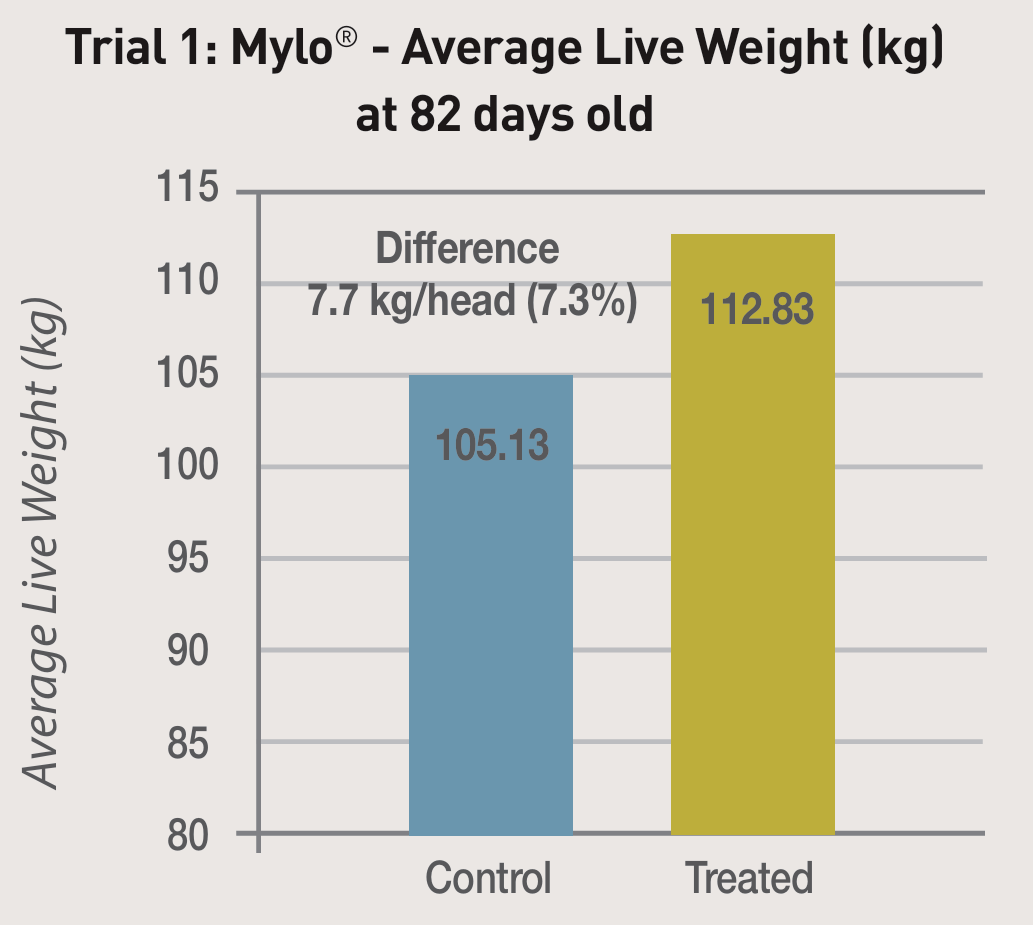
Average live weight of the Treated Group was 7.7 kg/head (7.3%) higher than the Control Group.
Furthermore, live weights were taken again after 14 days, for five of the calves from the Trial Group who weighed less than 120 kg at the time of the initial weighing. During the 14 day period, these calves recorded an average growth rate of
1310 g per day.
After the first few weeks of adding Mylo to the feed of the Treated Group, the farm owners observed many notable differences in health indicators compared to the Control Group: reduced scours, visually more energy, improved appearance and more aggressive feeding.
| Head | Average Live weight (kg) |
Estimated Average Growth Rate (g/day) |
|
|---|---|---|---|
| Control Group | 16 | 105.13 | 819 |
| Treated Group | 14 | 112.83 | 913 |
| Difference Treated – Control |
7.7 kg (7.3%) |
94 g/day (11.5%) |
One particular calf (# 6949), in the Treated Group had an early set back with a heavy case of scours and was in very poor condition. This animal was given 30 mL of Mylo per day for 3 days, compared to the standard amount of 10 mL per day. Having subsequently made a significant improvement in condition this calf recorded the heaviest live weight in the Treated Group, weighing the equivalent of 118kg at 82 days of age. The photos below show stages of this calf’s growth and improvement in health over the trial period.
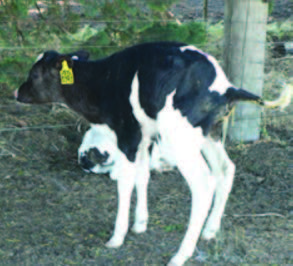
46 days old, no scouring, shiny coat
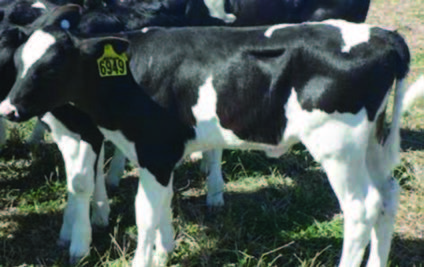
22 days old, heavy scouring, Poor condition
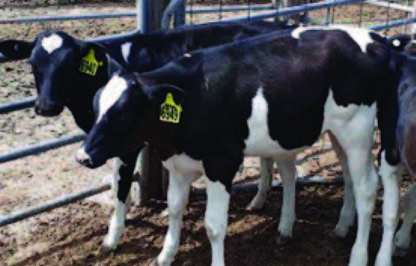
Final weigh in – shiny coat, healthy
Heaviest calf in the Trial Group
Results & Observations – Trial 2:
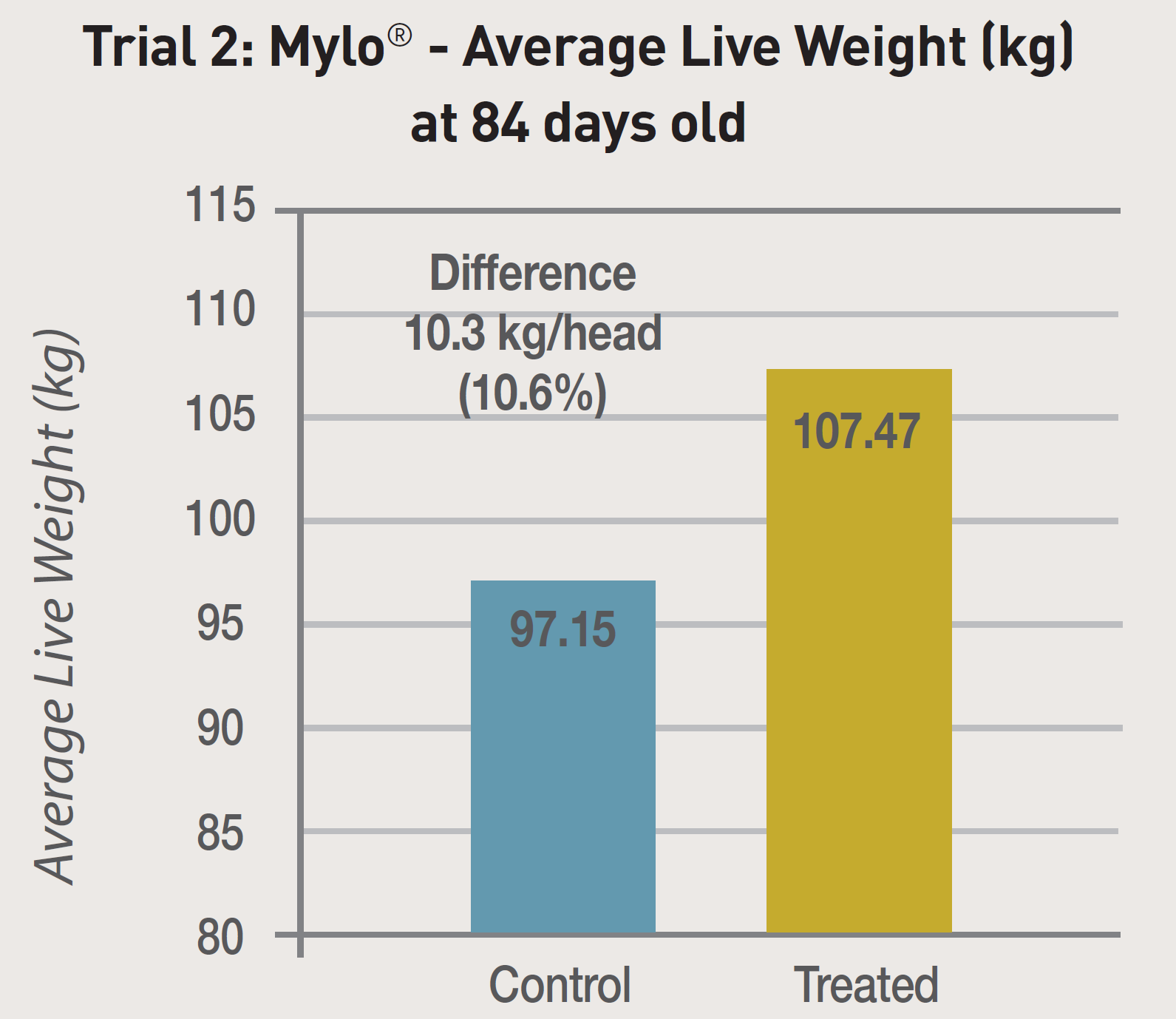
Average live weight of the Treated Group was 10.3 kg/head (10.6%) higher than the Control Group.
After the first few weeks of adding Mylo to the feed of the Treated Group, the same observations were made as reported in Trial 1 – that is, reduced scours, visually more energy, improved appearance and more aggressive feeding.
The following evaluation and comparison of health input costs for the two Groups in this trial provides a strong vindication to the economic benefits of providing Mylo as a feed supplement to improve calf health.
| Head | Average Live weight (kg) |
Estimated Average Growth Rate (g/day) |
|
|---|---|---|---|
| Control Group | 16 | 97.15 | 704 |
| Treated Group | 17 | 107.47 | 827 |
| Difference Treated – Control |
10.3 kg (10.6%) |
123 g/day (17.4%) |
Trial 2: Health Costs Evaluation
| Health Suppliments and Treatments | Control Group | Treated Group | ||
|---|---|---|---|---|
| Head | Cost $ | Head | Cost $ | |
| Mylo Feed Supplement $0.125/head/day for 84 days | 16 | – | 17 | $178.50 |
| Trisoprim (Antibiotic Treatment) 5 mL x 5 days @ $0.20/mL | 5 | $25.00 | 1 | $5.00 |
| Scourban (preventative): 30mL per dose Twice/day x 3 days, @ $0.14/mL | 16 | $403.20 | 0 | – |
| Total Health Cost – by Group | $428.20 | $183.50 | ||
| Total Health Cost per Calf | $26.80 | $10.80 | ||
Economic Benefit:
The Treated Group health costs were $16 per head less than the Control Group while the Treated Group achieved 17.4% (123 g/day) superior growth rate, or more than 10% better average live weight by the end of the trial.
Conclusion: The implication of higher live weights recorded in this study is that calves given Mylo are estimated to reach the target 120kg live weight at least 10 days earlier than the Control Group. Subsequent savings in feed costs, management time, and health costs will significantly exceed the cost of Mylo (approximately $11 per head for 3 months). Furthermore, better development of the gastrointestinal organs, as determined by the controlled study conducted by University of Queensland, is expected to confer advantages in health and productivity through maturity.
INDEPENDENT FIELD STUDY CALF LIVE WEIGHT AT WEANING
LIVE WEIGHT STUDY IN CALVES
Brad Fischer, Campbell House, Meningie, South Australia
Introduction: A trial was conducted on a commercial dairy farm near Meningie, SA, running a herd of 600 milking cows. Calves are normally grown for a period of 70-90 days or until achieving weaning weights of approximately 85 kg for Wagyus and 100 kg per head for Friesians.
Aim: The trials aimed to determine the effect of Mylo, a feed supplement, on the weaning weight and growth rate of calves, and to observe differences in calf health indicators.
Design: Each trial enrolled a total of approximately 17 calves (heifers and bulls), divided into two groups of approximately even number. The Treated Groups were
given Mylo as a feed supplement and the Control Group was not given Mylo.
Trial Feeding: Calves in the Treated Groups were given 10 mL per day.
Assessment: Calves were weighed close to weaning and ages were recorded. For comparison of weights between groups, live weights were corrected for calf ages at the time of weighing. The individual birth weights were measured and used for calculating individual gains of each calf.
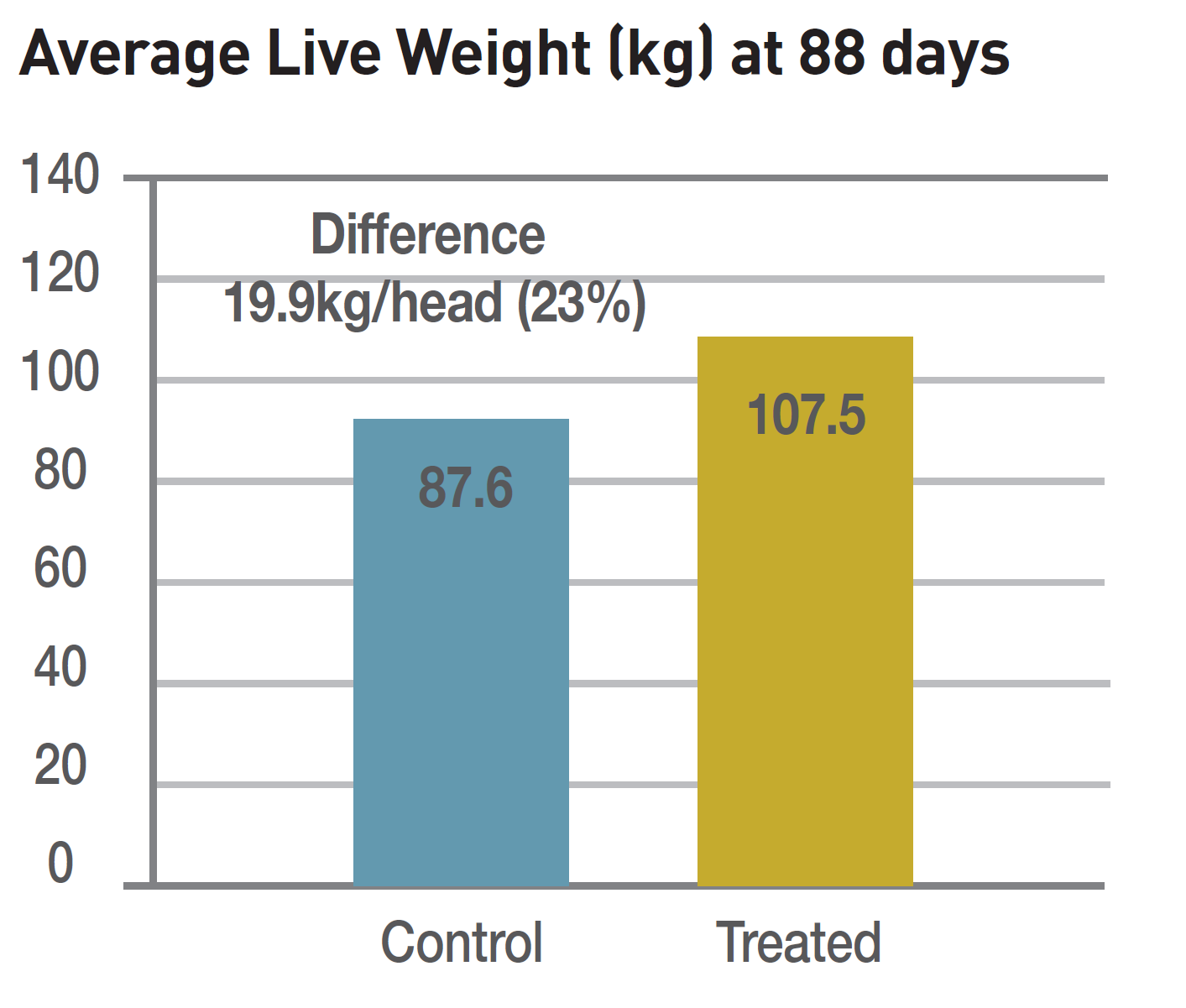
Timeline to Target Weaning
These estimates are an extrapolation from average daily gain.
| Breed | Target Weight | Treated | Control | Days to Achieve target weight |
|---|---|---|---|---|
| Friesian | 100 kg | 76 days | 106 days | Treated 30 days quicker |
| Wagyu | 85 kg | 65 days | 89 days | Treated 24 days quicker |
Results & Observations:
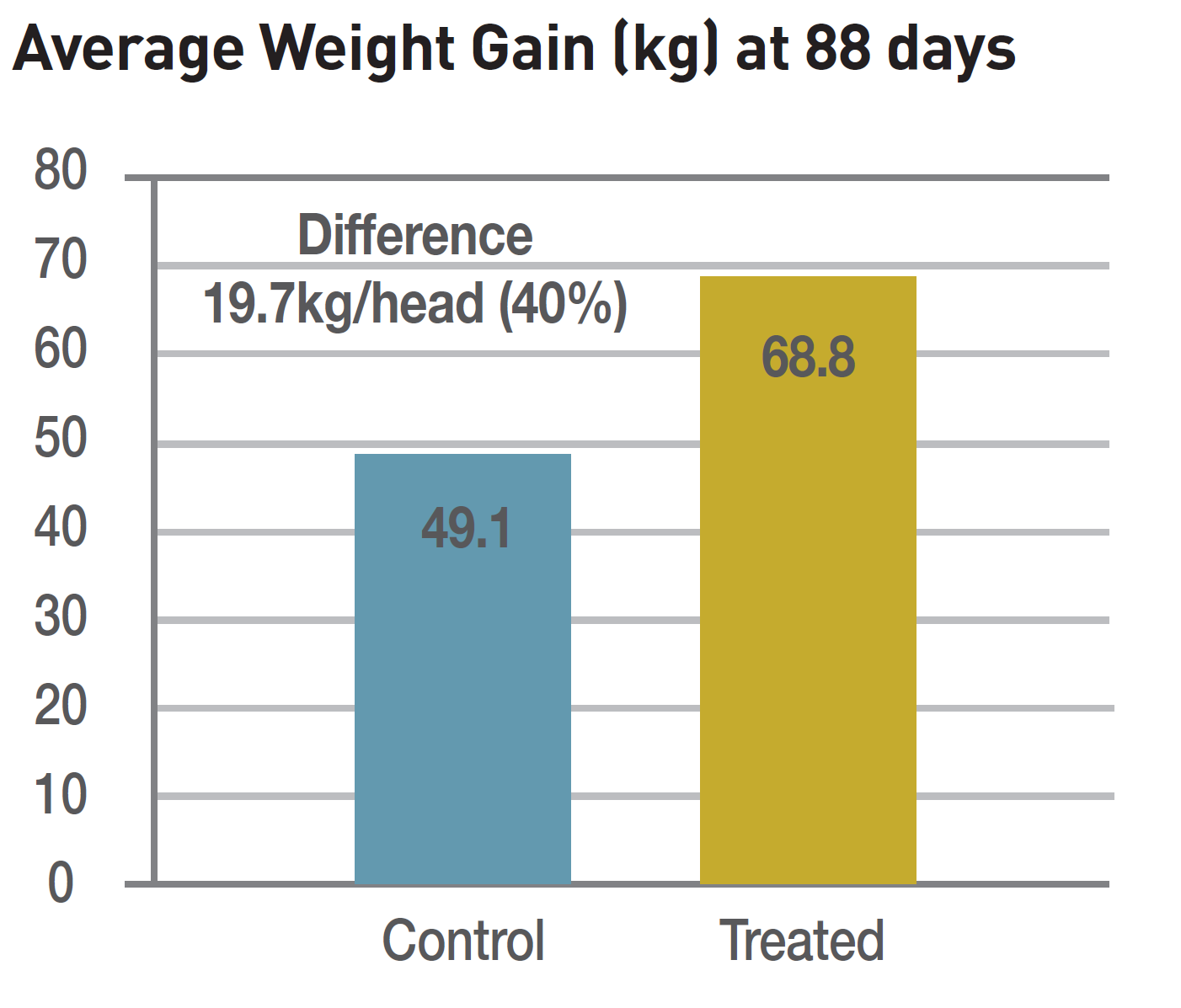
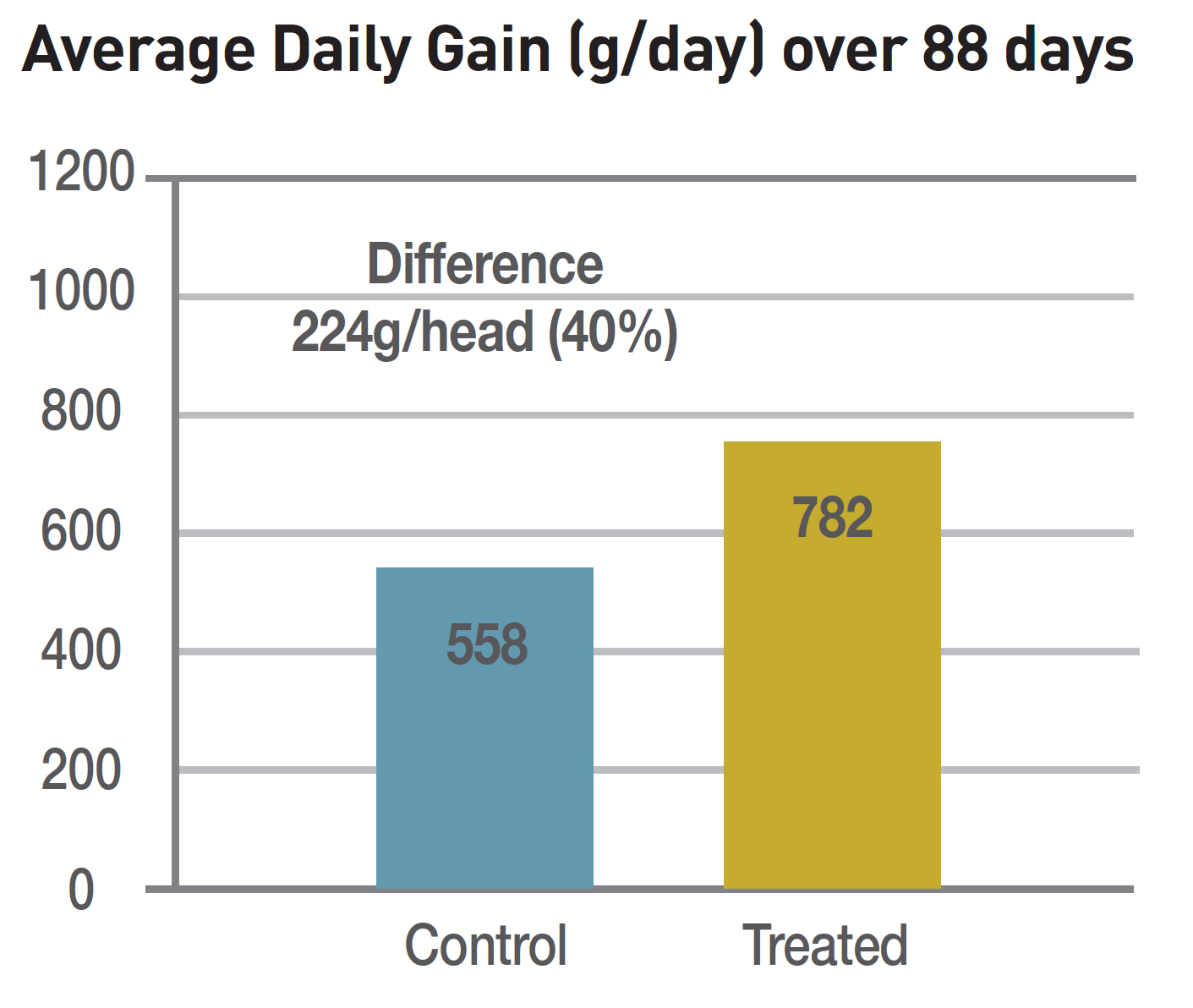
The table above shows average weights and gains recorded for the two groups. During the trial neither group had received additional animal health treatments. There were noticeable cases of scouring throughout the Control Group unlike the Mylo Treated Group that exhibited no scouring.
The difference in scouring incidence may have had a positive effect on the Mylo Treated Group that showed higher weight gain when compared to the Control Group.
Calf rearing staff had noticed significant increase in aggressive feeding habit in the Mylo Treated Group. The calves were more active in nature and the feeding timelines
were reduced.
Brad Fischer had made the decision halfway through the trial to treat all of his remaining and newborn calves based on the visual growth, health and condition of the Mylo Treated Group. The operation was using a powder supplement beforehand and had now decided to utilise Mylo due to its easy liquid form and with no risk of overdosing animals. The Mylo is now being utilised in the Auto Calf feeder operation where it is added to the fresh milk daily.
While the difference in daily gain between treatment groups is large, so too was the variability. However, this positive effect on calf weight gain in this trial is consistent with that of previous controlled studies.
- Gains in weaning weight transfer to benefits in earlier maturity and improved productivity.
- Significant reduction in weaning timeline helps to reduce costs associated with Fresh Milk, Milk powder and on farm staffing inputs.
- Benefits observed in calf health, and reduced costs of health treatment, add further to the gains in weight.