Independent Field Research Data Dec 2016 Pasture
The effect of a commercial probiotic on milk quality of dairy cows
Full paper is published in the Journal of Dairy Science, 2019. (Manuscript ID JDS-18-15411.R3)
Controlled Study – Independently Conducted by University of Queensland
Aim:
This extensive and scientifically robust study aimed to determine the effect of Great Land® treated pastures on milk production, milk quality and animal health in a commercial dairy.
Study Online:
A controlled, randomised block design study was conducted on a commercial dairy farm at Harrisville, southeast Queensland. Eleven paddocks each of approximately 3 hectares with stablished ryegrass based pastures were each divided into two sub-paddocks. Half of the sub-paddocks were treated with Great Land® and the other half were untreated. All other practices, for example fertiliser, irrigation and grazing practices were applied consistently across the treated and control study areas. Paddocks selected for the study had a uniform pasture sward dominated (95%) by rye grass, with the balance being clover and lucerne.
A herd of 280 cows with year-round calving were randomly selected into two equalsized experimental herds and assigned to graze separately on either treated or untreated pasture, under a 12-hour rotation program.
All cows were fully fed throughout the study period, supplemented with a mixed ration, and grazed at the same stocking rate. Individual cows were enrolled in the study after reaching mid-lactation (after 80 days in milk). Cows were milked twice a day during the study period of 176 days, from mid-June to early December 2016.
Treatments:
Treated sub-paddocks received boom spray applications of Great Land® at 10* Litres per hectare, repeated three times in the following periods: early May; late-July and October 2016.
Treatment group: data was recorded on a total of 98 cows grazed on pastures treated with Great Land®. Control group: data was recorded on a total of 114 cows grazing only untreated pastures.
Assessments:
For the cows enrolled in the study, weekly recordings of milk volume, milk solids content and somatic cell counts (SCC) were collected. Pasture and ration consumption were controlled to stabilise total feed intake. Health disorder incidents were also recorded as they were observed. Milk production and SCC data of affected cows during treatment were included for data analysis.
Results:
Cows grazing Great Land® treated pasture achieved higher milk production and health indicators compared to cows grazing untreated pastures. The following key results were found after controlling for the effect of days in milk, cow lactation and dry matter intake.
Milk Production:
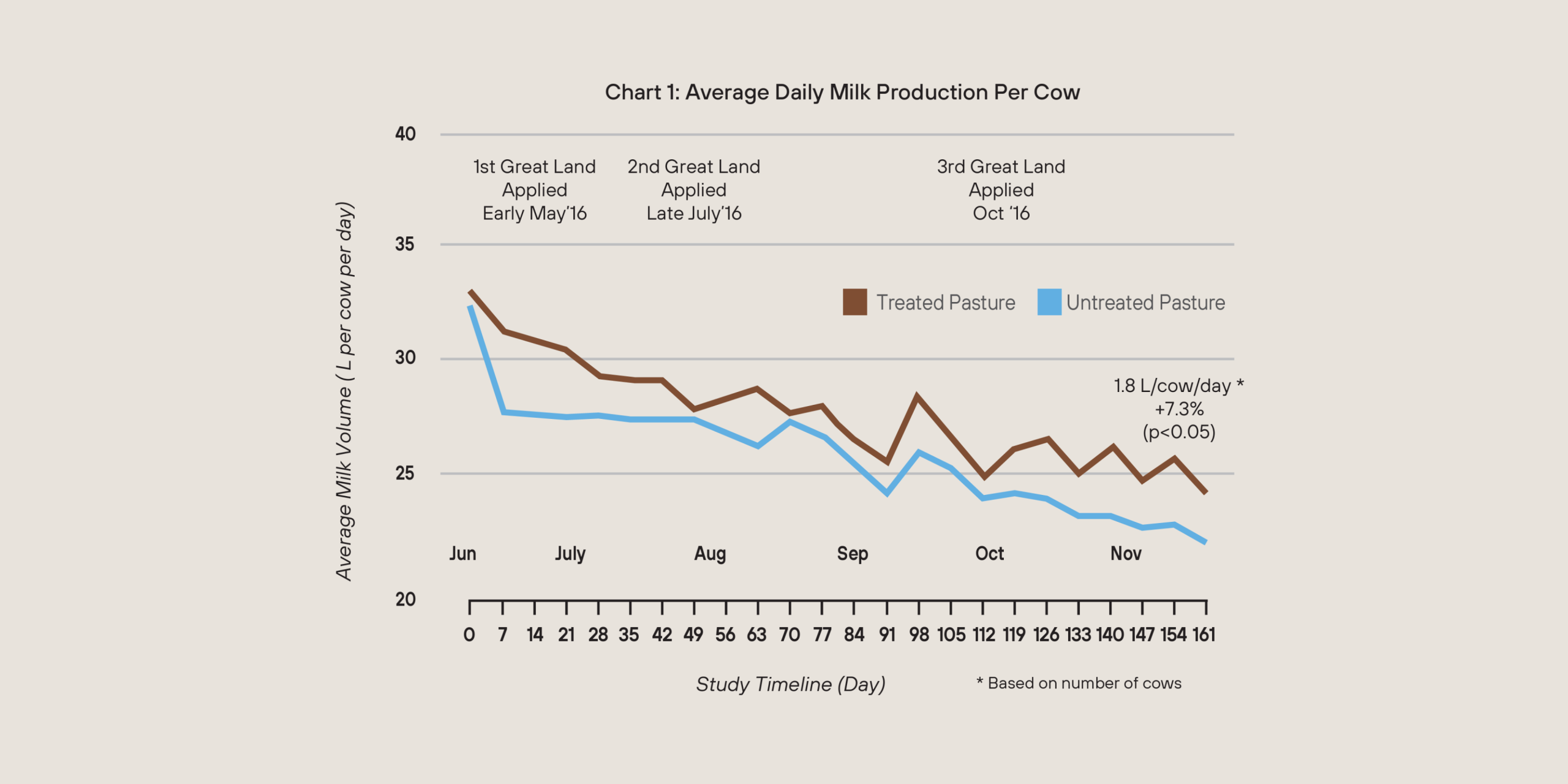
Cows on treated pasture produced 1.8 litres (7.3%) more milk per cow per day p<0.05) than cows grazed on untreated pasture (Chart 1). This gain equates to an extra return of more than $200/cow/season.
Since milk data from mastitic cows was included for analysis, this difference understates the impact on the quantity of saleable milk. Refer to Mastitis results, page 5.
* Trial application rate equivalent to new Great Land formulation, released December 2018
Milk Solids:
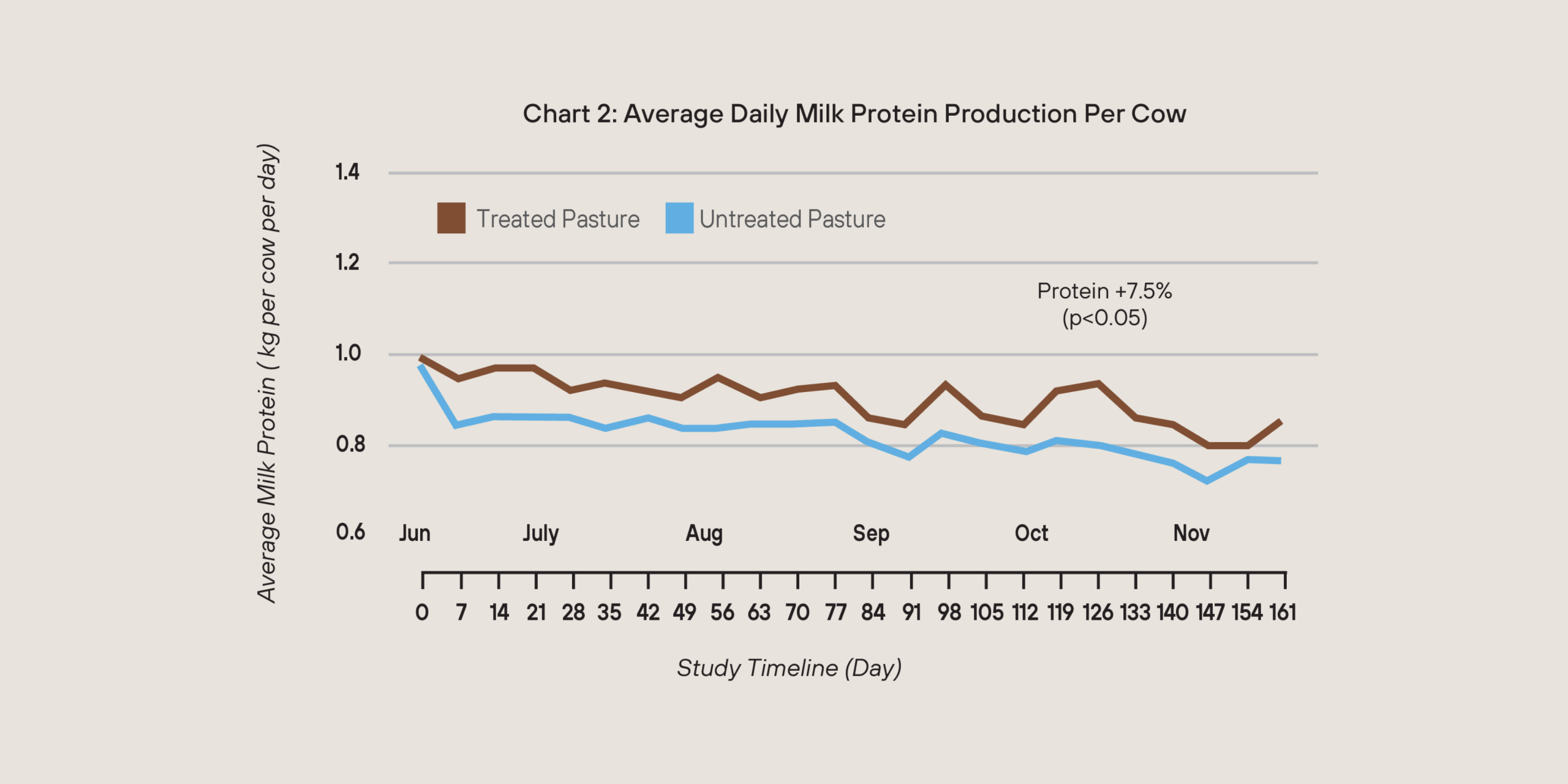
Treatment group cows produced an additional 0.06 kg (7.5%) protein per cow day (p<0.05) than cows grazing untreated pasture (Chart 2). Milk fat for cows grazing on treated pasture was recorded at 0.03 kg (4.6%) per cow per day higher, however the difference was not statistically significant.
Mastitis and Somatic Cell Count:
The occurrence of mastitis was low. Over the whole 6 months study period a total of 66 mastitis incidents were recorded in the enrolled cows, a rate of 31 per 100 cows. Cows grazing on treated pasture had a mastitis incidence rate of 28.6 per 100 cows, 14% lower than the control herd at 33.3 per 100 cows.
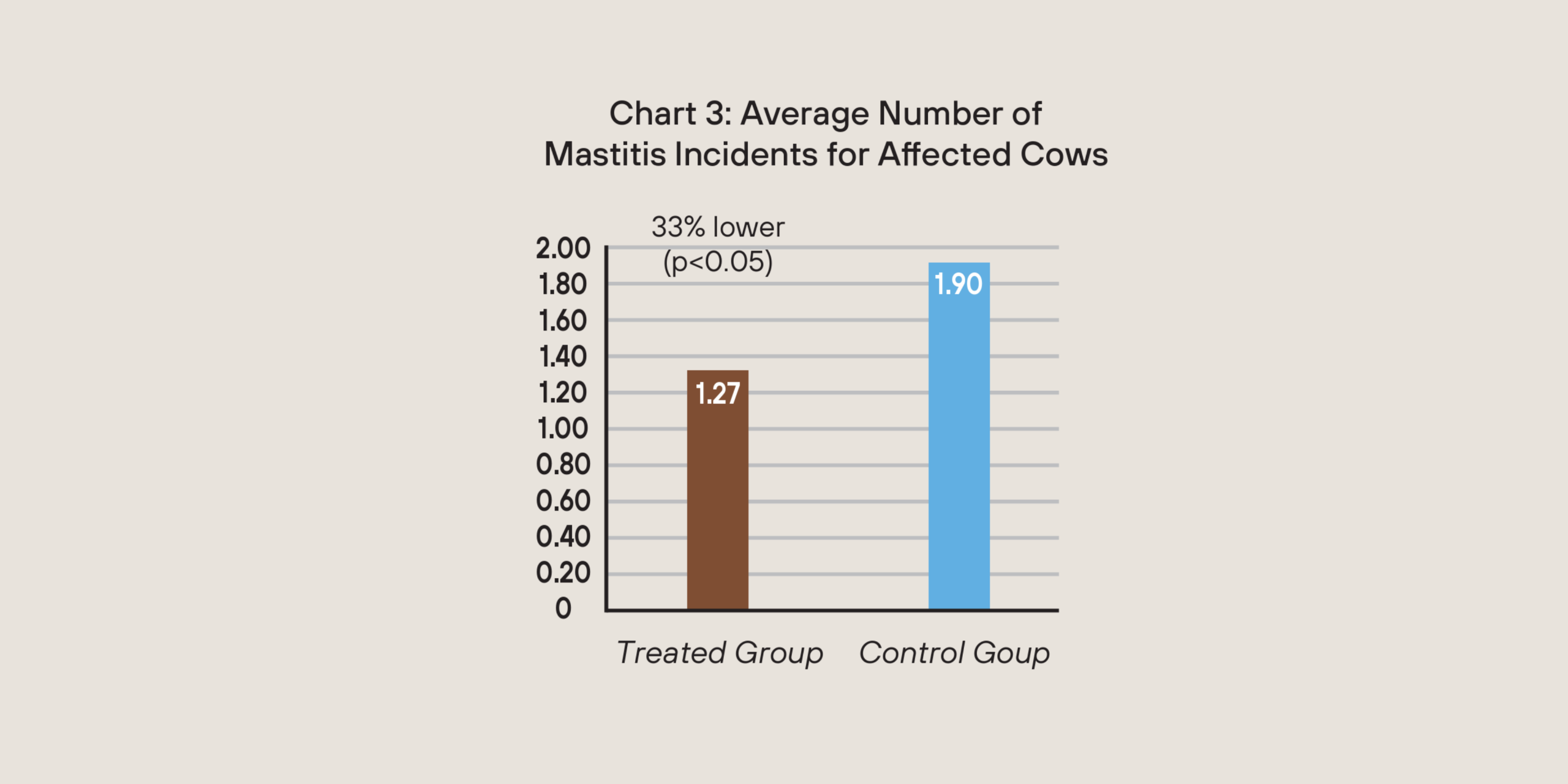
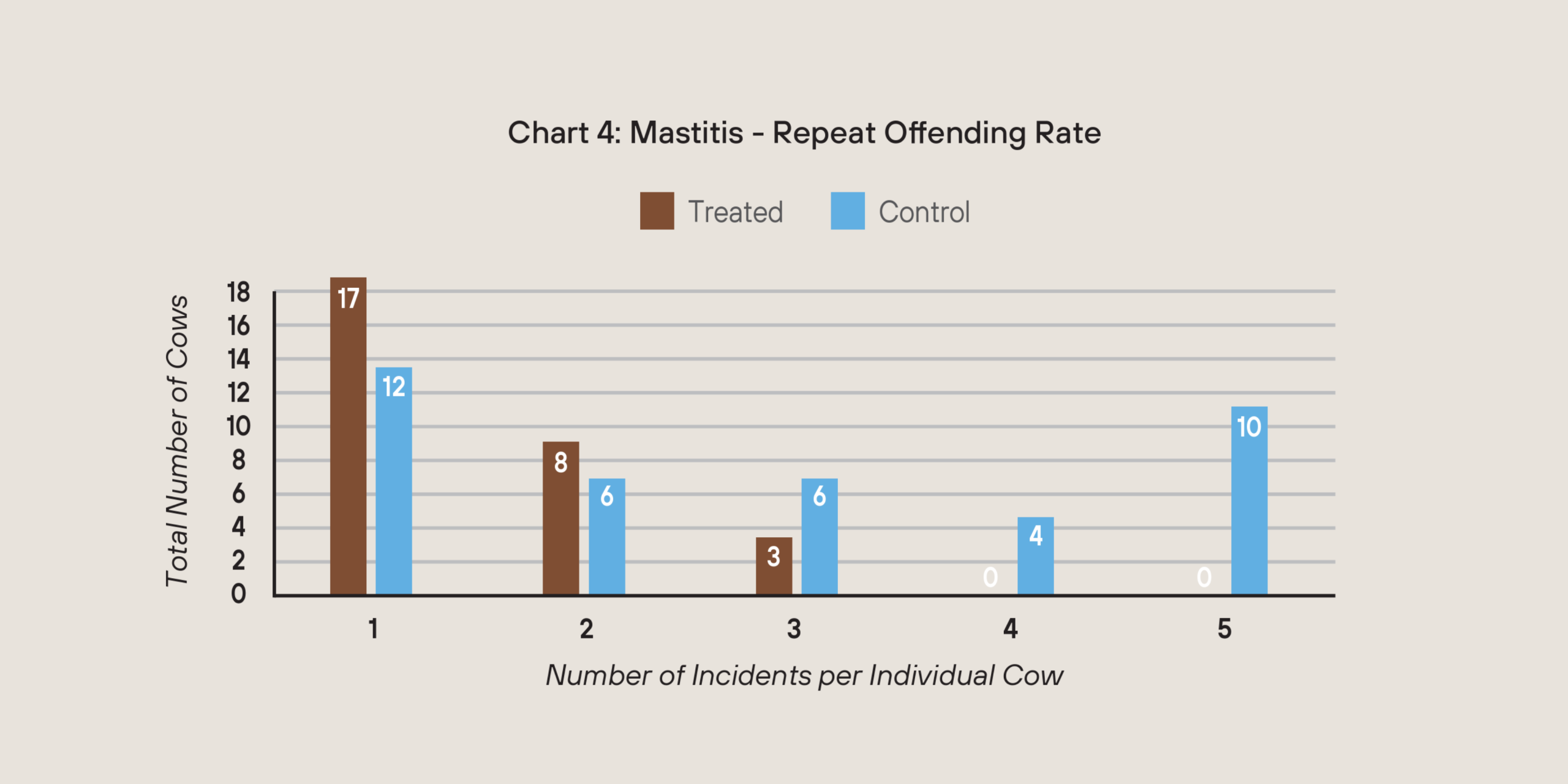
Notably, of the cows observed with mastitis, the Great Land® grazing group recorded a repeat offending rate 33% lower (p<0.05) than the control herd. The average number of mastitis incidents for cows with at least one mastitis occurrence was 1.27 and 1.90 for the Great Land® grazing group and control group, respectively Chart 3 and 4 demonstrate the significantly different pattern of repeat incidents between the two study groups.
This outcome supports evidence from other field work which indicates that extended exposure to Great Land® treated pasture leads to improving cows’ ability to withstand and recover from health ailments, including mastitis. Further strengthening this case is that all affected cows were treated in a conventional manner.
Milk Solids:
Treatment group cows produced an additional 0.06 kg (7.5%) protein per cow day (p<0.05) than cows grazing untreated pasture (Chart 2).
Milk fat for cows grazing on treated pasture was recorded at 0.03 kg (4.6%) per cow per day higher, however the difference was not statistically significant.
Mastitis and Somatic Cell Count:
The occurrence of mastitis was low. Over the whole 6 months study period a total of 66 mastitis incidents were recorded in the enrolled cows, a rate of 31 per 100 cows. Cows grazing on treated pasture had a mastitis incidence rate of 28.6 per 100 cows, 14% lower than the control herd at 33.3 per 100 cows.
Notably, of the cows observed with mastitis, the Great Land® grazing group recorded a repeat offending rate 33% lower (p<0.05) than the control herd. The average number of mastitis incidents for cows with at least one mastitis occurrence was 1.27 and 1.90 for the Great Land® grazing group and control group, respectively Chart 3 and 4 demonstrate the significantly different pattern of repeat incidents between the two study groups.
This outcome supports evidence from other field work which indicates that extended exposure to Great Land® treated pasture leads to improving cows’ ability to withstand and recover from health ailments, including mastitis. Further strengthening this case is that all affected cows were treated in a conventional manner.