Ask an agronomist to back a new crop protection product and the first question is usually, “What’s it been trialed on?” That instinct is sound — most conventional inputs act on a specific pest, pathogen, or physiological pathway that can vary meaningfully from one crop to the next. But when the same question gets applied unchanged to live microbial biostimulants, it can lead growers and advisors to ask for the wrong kind of evidence.
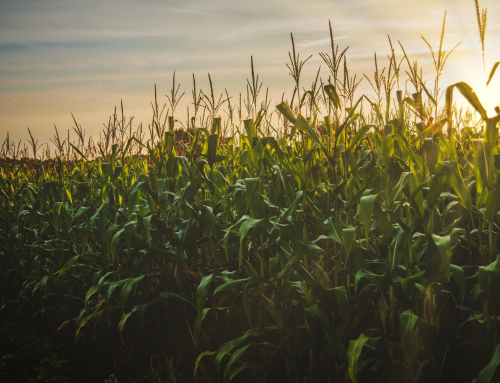
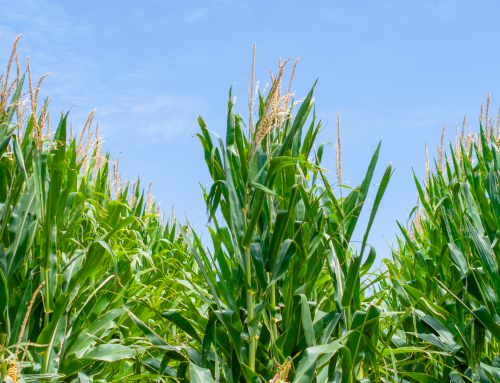
Live microbial biostimulants such as Great Land Plus don’t target a crop. They target an environment — the rhizosphere and phyllosphere — that exists, in largely the same biological form, under wheat, canola, cotton, pasture, and horticultural crops alike. Understanding that distinction changes how the evidence should be read, and what questions are actually worth asking before adoption.
The environment is the target, not the plant
Conventional crop protection products are built around a specific interaction: a herbicide’s mode of action against a weed’s physiology, a fungicide against a pathogen’s life cycle. Change the target species and the product may simply stop working — which is exactly why crop- and pest-specific trial data matters so much in that category.
A live microbial biostimulant works differently. Its activity is directed at soil and plant-surface microbial communities and the biological processes they drive — nutrient cycling, phosphate Solubilisation, hormone production, competitive exclusion of pathogens. Those processes occur in the rhizosphere of almost every agricultural plant. The host crop is more like the neighbourhood the biology operates in than the mechanism it acts on.
The practical implication: the crop is rarely the variable that determines whether a biostimulant’s mode of action holds. Soil biology, organic matter, moisture, temperature, nutrient status, and how well the microbial population establishes typically explain far more of the variation in outcome than the identity of the crop itself
A familiar analogy: glyphosate and the weed spectrum
Growers don’t ask for a separate proof-of-concept trial on every weed species before accepting that a non-selective herbicide works. The mode of action — disruption of a biochemical pathway common across plants — is broadly applicable. What does change from one situation to the next is the magnitude and timing of the response: weed size, growth stage, and application conditions all influence outcome, without calling the underlying biology into question.
Live microbial biostimulants sit in a similar category. The magnitude of response will genuinely vary between crops, regions, soil types, and seasons — that’s real and worth measuring. But variation in response size is not the same thing as variation in mode of action. The biological processes being influenced are largely consistent across cropping systems.
What this means for how evidence should be built
None of this is an argument against field validation — it’s an argument for validating the right thing. Research conducted across a representative spread of
crops, environments, and production systems is generally sufficient to establish that the biological mechanism holds. From there, crop-specific trials earn their place doing something different: quantifying the likely magnitude of response and refining rate, timing, and management recommendations for a given system — not re-litigating whether the technology works at all.
For agronomists evaluating a live microbial product, that reframes the due- diligence conversation. Useful questions include:
What is the documented mode of action, and is it tied to a process common across cropping systems, or to something crop-specific?
What soil and environmental conditions (moisture, temperature, organic matter, existing microbial load) is the response most sensitive to?
How does the product support microbial establishment, and what management practices help or hinder that?
Where crop-specific data exists, is it being used to quantify response magnitude — or as a stand-in for proof of concept it was never designed to provide?
The more useful question
The conversation worth having isn’t “does the biology change between crops?” For a well-characterised live microbial biostimulant, in most cases it doesn’t — the rhizosphere processes being influenced are common ground across wheat paddocks, cotton fields, vineyards, and pasture alike. The more useful question, and the one that actually drives return on investment, is: under what environmental and management conditions can the product deliver the greatest benefit, in this system, this season?
Answering that question well is where crop- and region-specific data genuinely earns its keep — not in re-proving a mechanism that a representative body of research has already established.